
Hand surgery - Budapest
A hand a means of work and life.
With experience gained at a leading hand surgery centre, I can help you regain full function of your hand — through personalised consultations, clear explanations and in a calm, professional environment.
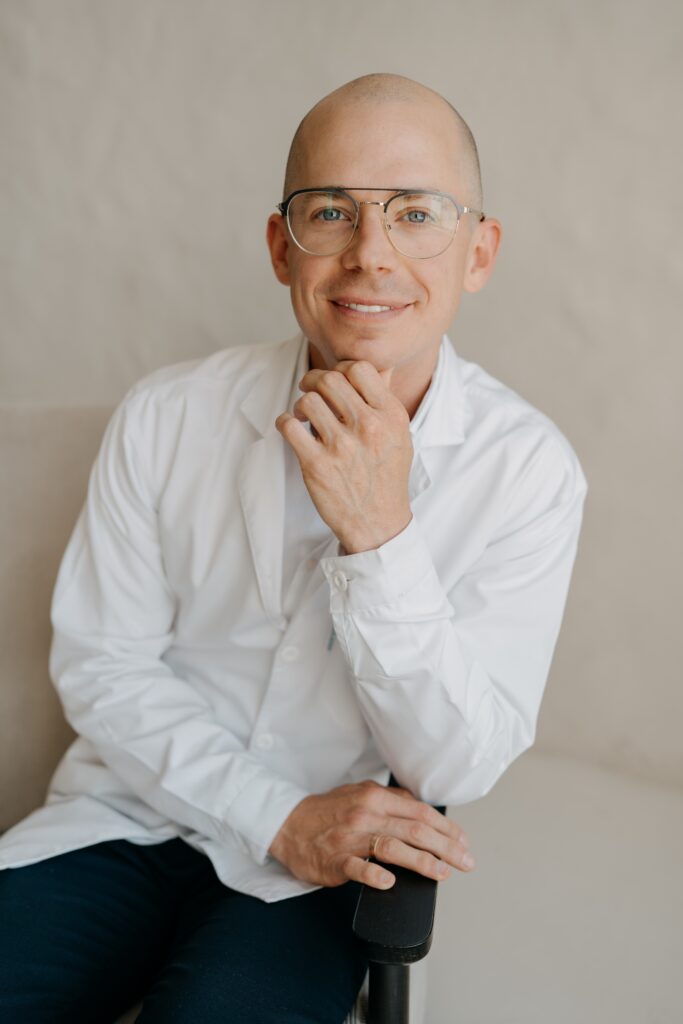
Dr. Dániel Koczka
Hand surgeon
Personalised
Calm, patient, and attentive care.
Semmelweis Premium
Quiet, cultured environment, professional care
A diagnosis in plain language
Clear answers, calm communication.

About
Experience that
is both precise and human.
I am Dr. Dániel Koczka, hand surgeon and orthopaedic traumatologist at Semmelweis University. My work focuses on the precise diagnosis and personalised treatment of chronic pain, nerve and tendon problems and post-injury lesions of the hand. My aim is to provide my patients with safe and up-to-date care, with clear information, so that they can return to their daily activities as soon as possible.
- Semmelweis University, Department of Traumatology
- Member of the Hungarian Society for Surgery of the Hand
- International Fellowships and Work Experience
- Certified hand surgery specialist
A patient’s hand always has a story to tell — and the right diagnosis often begins with truly listening.
Dr. Dániel Koczka
Services
Comprehensive care for the full range of hand and wrist conditions
From diagnosis to post-operative follow-up, a single, transparent process with a personalised treatment plan.
Carpal tunnel syndrome
Carpal tunnel syndrome is one of the most common conditions involving nerve compression in the hand.
Elbow Tunnel Syndrome
Cubital tunnel syndrome is the second most common condition caused by nerve compression. The ulnar nerve, which runs along the inner side of the elbow, becomes compressed.
Trigger Finger
Trigger finger is a common tendon disorder affecting the hand. The tendons in the finger have difficulty sliding through a narrowed section of the tendon sheath, which can cause pain, a catching sensation or a characteristic „snapping” sound when the finger is moved.
Dupuytren's disease
Dupuytren's contracture is a condition characterised by the benign thickening and tightening of the connective tissue in the palm of the hand.
De Quervain’s Syndrome
De Quervain’s syndrome is a painful condition affecting the tendon sheath on the thumb side of the wrist.
Thumb Basal Joint Arthritis
Osteoarthritis of the thumb is a common joint condition affecting the hand. In this condition, the cartilage surface of the joint at the base of the thumb gradually wears away, which can cause pain, difficulty bearing weight and restricted movement.
Pseudoarthrosis of the scaphoid
The scaphoid is one of the small but important bones in the wrist; in some cases, a fracture of this bone can be difficult to heal.
Sudeck’s Syndrome / Complex Regional Pain Syndrome
Sudeck’s syndrome, also known as complex regional pain syndrome, is a condition characterised by persistent pain, swelling, stiffness and increased sensitivity following an injury or surgery.
Ganglion
A ganglion is one of the most common benign conditions affecting the hand and wrist. It usually appears as a fluid-filled lump originating from a joint or tendon sheath.
Your trusted partner in hand surgery
Private consultations at Semmelweis Premium Clinic.
Semmelweis Premium is Semmelweis University’s premium private healthcare facility, where traditional academic expertise meets a state-of-the-art, high-quality clinical environment. This is where I see my patients — in a calm, refined setting, with modern diagnostic and surgical facilities.
For me, it is important that the examination and treatment are not rushed, but are carried out with due attention. This is exactly what the Premium environment allows: enough time for consultation, smooth administration and a safe, well-equipped background for interventions.

Unsure whether surgery is necessary?
During your consultation, I will carry out a thorough examination and recommend surgery only when it is clearly indicated. In many cases, conservative, non-surgical treatment is the best option
Frequently Asked Questions
What most patients ask.
What complaints should you present to a hand surgery clinic with?
Can I attend with an acute injury?
Do I need a referral for the consultation?
No. You can book an appointment for a private appointment without a referral.
From what age does the practice accept patients?
Can a second opinion be requested?
Yes. A second opinion can also be requested in case of a previous diagnosis, surgery, findings or a prolonged complaint. In such cases, it is particularly important to present previous documentation, imaging material and surgical descriptions.
How long does a consultation take?
On average, a consultation takes 15-20 minutes. However, the aim is not to keep to the time frame, but to ensure that the complaint, previous findings, treatment options and next steps are discussed in a clear and understandable way.
What happens at the first examination?
During the first examination, we will discuss your complaints, previous illnesses, injuries, operations and treatments. This is followed by a physical examination to check hand movement, strength, sensation, pain, tendon and nerve function.
What to bring for your first time?
It is advisable to bring all previous findings and imaging studies: X-rays, CT, MRI, ultrasound, ENG/EMG, previous outpatient records, final reports and surgical notes. If available, imaging studies should be available, not just the textual findings.
Is it necessary to have an imaging study done in advance?
Not necessarily. In many cases, the physical examination will determine whether an X-ray, ultrasound, MRI, CT scan or nerve conduction study is needed. If such a test has already been done, it is always worth bringing it with you.
Is it possible to consult online?
For hand surgery complaints, a face-to-face examination is the safest way to diagnose the condition, because it often requires palpation, movement, sensation and special tests. Important details can easily be hidden online, so a face-to-face consultation is recommended.
Can a relative come to the consultation?
Yes. The presence of a relative or companion is of course allowed, especially if the patient wants help in reviewing the findings, making a decision or understanding what to do after the operation.
Will I get a written opinion after the test?
A written outpatient record of the results of the examination, the recommended treatment and further action is prepared and uploaded to EESZT. This will help with subsequent follow-up, physiotherapy and other specialist examinations if necessary.
Do you always need surgery?
No. Many hand surgical complaints can be improved initially with conservative treatment, such as rest, immobilisation, anti-inflammatory treatment, injections, physiotherapy or lifestyle advice. Surgery is considered if the complaint is persistent and conservative treatment is not effective, or if no improvement can be expected from conservative therapy.
Will the operation be performed under local anaesthesia or general anaesthesia?
This depends on the type of intervention, the nature of the complaint, the patient's general condition and needs. Some minor procedures can be performed under local anaesthesia, while for other operations regional anaesthesia or general anaesthesia may be indicated. The exact form of anaesthesia is decided on the basis of the surgical plan and anaesthetic considerations.
What interventions can be done in same-day care?
Many hand surgeries - such as certain tunnel releases, popping finger surgery, ganglion removal or minor soft tissue surgery - can be performed in a day-care setting under suitable conditions. The decision is always based on the disease, the extent of the operation and the patient's condition.
What can I expect after surgery?
Post-operative care varies from one operation to another. The most common procedures are: dressing change, suture removal, fitting of a brace, physiotherapy and follow-up examination. In all cases, the aim is to ensure that the wound heals safely while restoring as much function to the hand as possible.
When can I return to work after surgery?
This depends largely on the type of intervention and the nature of the work. Office work and light manual work can often be recovered more quickly, while physical work, lifting, heavy gripping or repetitive strain can take several weeks, and in some cases months, to recover.
When can you drive again?
Guidance is recommended if the hand can be used safely without pain, the bandage or restraint does not interfere with movement and the patient is not taking any medication that affects reaction time. The exact time should always be determined by the type of surgery and the current condition.
Do I need physiotherapy after the procedure?
It depends on the intervention and the condition of the hand. After some surgeries, home exercise and gradual weight-bearing are sufficient, while in other cases, targeted hand exercises or hand therapy are needed. Where physiotherapy is indicated, the involvement of the right specialist is an important part of rehabilitation.
Will I need a follow-up appointment?
Yes, if your condition or treatment requires it. A follow-up visit may be needed to check the wound, remove sutures, monitor healing, remove any fixation device, start physiotherapy, or guide the gradual return to normal use of the hand.
What are the risks of hand surgery?
All operations may have general and specific risks, such as bleeding, infection, wound healing, scar pain, tenderness, stiffness, swelling or partial persistence of the complaint. Specific risks are always discussed on a case-by-case basis in the context of the specific operation.
How much does the first consultation cost?
The current consultation fee is shown when you book your appointment.
Where can I find the price of the interventions?
Prices for interventions are available in the prices section. However, the exact amount will depend on the diagnosis, type of procedure, anaesthesia, implants and details of the treatment, so each patient will receive a personalised quote.
Is credit card payment available?
Yes, credit card payment is available.
Why can the price of two similar operations be different?
The price depends not only on the name of the operation, but also on the exact content of the treatment. It can be influenced by the type of anaesthesia, the length of the operation, the equipment needed, the implant, the controls and whether further tests or rehabilitation are required.
When should you seek medical advice without delay?
If you have numbness, clumsiness, muscle weakness, deteriorating hand function, night-time complaints, persistent pain, a rapidly growing lump, remaining mobility problems after an old injury or suspected nerve and tendon damage, you should seek hand surgery as soon as possible.
What should I do if my complaints are long-standing?
Testing also makes sense for chronic complaints. Long-standing pain, numbness, restricted movement or weakness can often be due to a treatable condition, but an accurate diagnosis and detailed assessment of function is needed to make the right decision.
Can I request an examination after previous surgery?
Yes. You can also request an examination if you have pain, stiffness, numbness, weakness, scar complaints or loss of function following previous hand surgery or accidental surgery. In such cases, it is particularly useful to provide a previous surgical description, final report and imaging material.
What happens if further investigation is needed?
If further investigation is needed to clarify the diagnosis, a recommendation is made for an appropriate course of action, such as X-ray, ultrasound, MR, CT or ENG/EMG. The treatment plan can be refined with the results of these tests.
What should I do if I can't make my appointment?
If the booked appointment is not suitable, it is advisable to notify the ordering or booking interface as soon as possible. This way, the appointment can be released for another patient and a new appointment can be made.
How personalised is the treatment?
Hand surgery treatment is always based on the complaint, the findings, age, activity, work, workload and the patient's goals. The same diagnosis may require different treatment for an office worker and a physically active patient who works with their hands.
Your trusted partner in hand surgery
Have a question? Feel free to search!
info@kezsebeszbudapest.hu
Address
Semmelweis Premium Clinic 1082 Budapest, Üllői út 78
Ordering time
Tuesday: 15:30 - 18:00
Send mail to
* Fields marked with an asterisk are required.